
Homilies
That's Not Fair!
Holy Spirit, take my words and speak to each of us according to our need.
Have you ever noticed that there are some words that children seem to learn very early in life. “But, that’s not fair!” It doesn't take long before they discover the concept of fairness.
You can hear it everywhere; in the playground, in the classroom, at home. “Why has she got a bigger piece of cake than me?” “Why does he get to stay up later?” “Why do I have to do the washing-up when she doesn't?” And, if we're really honest with ourselves, we don't necessarily grow out of it as an adult either.
We might become a bit more sophisticated in the way we express it, but somewhere inside many of us there is still a little voice saying: “That's not fair.”
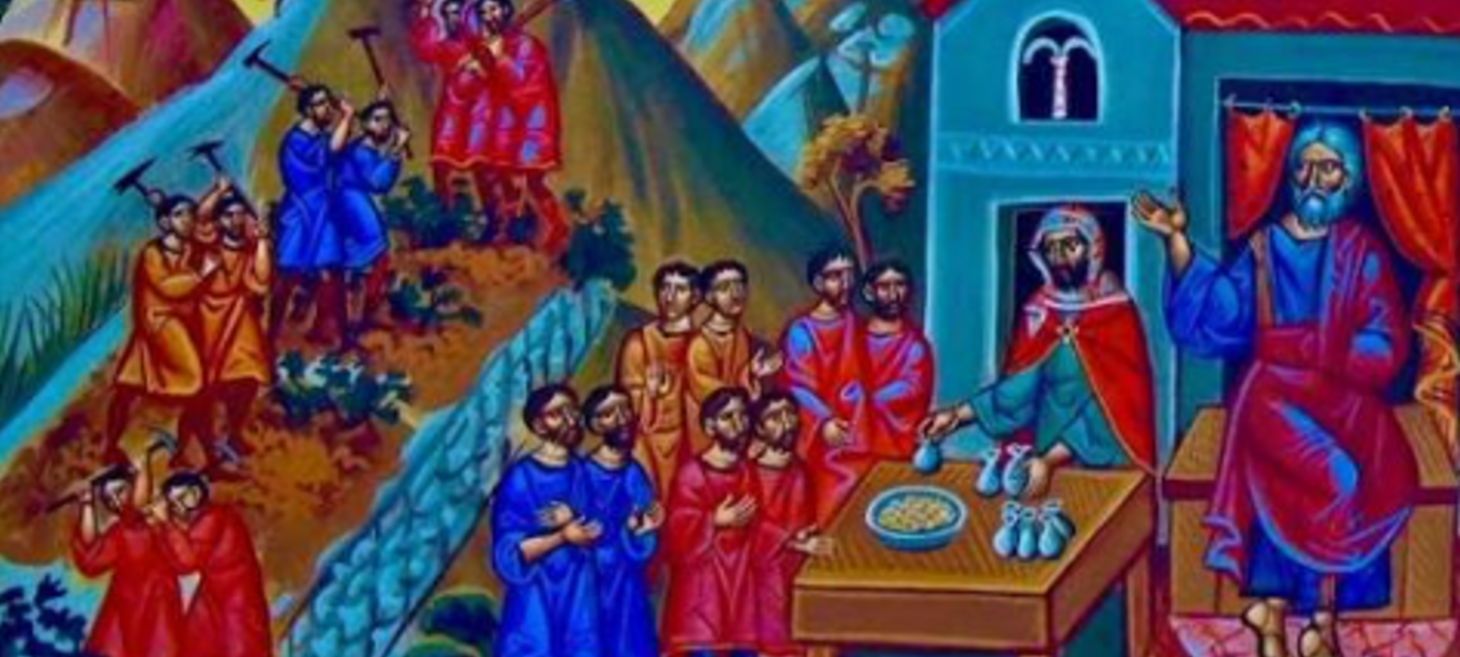
And that is exactly the reaction we get in today's Gospel about the workers in a vineyard. Some are hired first thing in the morning. They work all day, through the heat. Others are hired at nine o'clock. Others at noon. Others at three. And finally, some are hired at about five o'clock, with only an hour of the working day left. Yet at the end of the day, the landowner pays them all the same.
And the people who have worked all day are understandably unhappy. “That's not fair!” they cry and our instinct usually is to agree with them. After all, if you've worked twelve hours, surely you should get more than someone who has worked one hour?
But the landowner hasn't actually cheated them. They were paid exactly what they had agreed to receive. The problem isn't that they have been given too little. The problem is that someone else has been given just as much for doing less.
And that brings us to something quite profound about how God's grace works because whether this story seems fair or unfair depends upon the way we look at it.
Imagine, for a moment, that God's love is something we have to earn. We might be inclined to think: “I've been coming to church for sixty years.” “I've said my prayers.” “I've tried to live a decent life.” “I've supported the church.” “I've brought up my family.” “I've done my best.”
All of those things are good things but if we start thinking that those things have earned us God's love, then suddenly grace becomes a kind of payment or transaction. And once we think that way, we can start keeping score. I've done this much. I've given this much. I've prayed this much. I've served this much. Therefore, surely I deserve this much from God.
And then we look at somebody else. Someone who hasn't been to church for years, or who might have made a mess of their life. Someone who comes to faith late in life or who hasn't done even half the things we have done. Does God love them any less?
If God's love is a wage, then we can argue about whether the wages are fair. But if God's love is grace, then everything changes.
Imagine a grandmother buying presents for her grandchildren. She doesn't calculate: “This child has been particularly good this year, so I'll spend £40.” “This one has been reasonably good, so £25.” “And this one has been a bit difficult, so perhaps I'll give them nothing.”
That's not how love works. The gift isn't a wage. It isn't payment for good behaviour. It's a gift because they are loved. And if one child receives the same generous gift as another, we wouldn’t say the first child has been cheated. We would celebrate and say: “How lovely. They've all been remembered.”
Generosity doesn't follow the mathematics of deserving. And God's grace certainly doesn't.
There is also another important illustration in this Gospel story. The landowner keeps going back to the marketplace. He goes in the morning. Then again at nine. Again at noon. Again at three.And even at five o'clock and there are people still standing there waiting. Nobody has chosen them. Nobody has offered them work. And the landowner says: “You also go into the vineyard.”
Could this be a metaphor for the Church? Because there are people all around us who have spent years feeling that they don't belong. People who think they are too old. Too young. Too broken. Too complicated. Too far away from God. People who think they've made too many mistakes.
And the Gospel says: There is still room in the vineyard. God doesn't say: “You should have come earlier.” God says: “Come.”
This is where the parable speaks to those of us who have been Christians for many years. There can be a temptation, especially when we have given a lifetime to something, to think: “I've earned my place.”
But the wonderful and slightly uncomfortable truth is that we haven't. None of us has earned God's love. Not the person who has been in church for seventy years nor the person who arrived last Sunday. Not the person who struggles to believe nor the person whose faith is strong.
All of us stand in exactly the same place before God. We are recipients of grace. God loves everyone; even those we don’t. And God chooses to give his grace freely.
We need to remember that God’s grace is not like pie. It doesn’t mean that if someone takes a bit, there is less left to go around. It’s more like a flame. One flame can light many other candles without making itself any dimmer.
That should change the way we look at the people around us. Instead of asking: “Do they deserve it?” We might ask: “How can I help them discover that they are already loved?” Instead of wondering: “Why should they receive the same welcome?” We could thank God that there is enough grace for all of us. Because there is.
There is enough grace for the person who has been faithful all their life and enough grace for the person who has wandered away. Enough grace for the person who is just beginning to ask questions and enough grace for the person who comes into church carrying grief, regret, loneliness or uncertainty.
The final challenge of this parable is not simply to understand that we all can receive God's grace. It is to rejoice when somebody else receives it too. Their grace doesn’t diminish ours.
That can be difficult. We may sometimes find ourselves thinking: “After all I've done…” But God says: “Yes, I am grateful for all that you have done. But you were never earning my love. You were living in it.”
The workers who arrived first were never loved more than those who arrived last. And the workers who arrived last were never loved less. They were all invited into the same vineyard. They were all welcomed by the same landowner. And they all received from the same generosity.
So our takeaway for today is that we can put away our spiritual measuring sticks. We don't need to measure how good we are or how good somebody else is. We don't need to keep score.
Because in the kingdom of God there is no leaderboard. There is simply a God who keeps coming out into the marketplace, looking for people who are still waiting, and saying: “Come. There is work for you. There is a place for you. There is grace for you.”
And when we hear that, our response doesn't need to be: “That's not fair.” it can simply be: “Thank God.”
Amen.