
Homilies
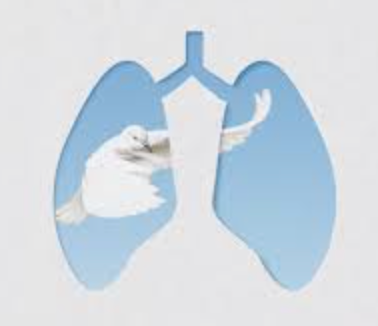
When God Breathes
When God Breathes Again
Holy Spirit take my words and speak to each of us according to our needs.
I think the disciples in today’s Gospel are actually quite reassuring. Because they are not brave. They are not out there changing the world. They are not full of confidence and bold faith. - They are hiding.
The doors are locked. They’re afraid. And they don’t know what will happen next. That doesn’t seem too far away from how faith can sometimes feel for us as well; doubts, questions, worries.
And then, into that room, into their fear, appears Jesus. No knocking. No forcing his way in. Just… presence. And the first thing he says is: “Peace be with you.”
Not demanding, “Where were you?” “Why did you run away?” or “why are you hiding?” Just: ‘Peace.’ And then he says it again. It’s comforting and reassuring, a feeling that all will be alright again.
They also probably needed to hear it twice. Because if someone who had been dead a few days earlier suddenly appeared in the room…“peace” might not be your immediate emotional response. It made me think of the exhortations of the angels who, when they appear, immediately begin with ‘Do not be afraid’
We also know that the disciples went on from here to do great things but in this moment, this pause, there’s something really important to notice.
Before anything else happens, before they are sent, before they are given anything to do, they are given peace.
And we often get that the wrong way round.
Stephen Cotterill, the Achbishop of York, wrote a book called ‘Hit the ground kneeling.’ In it, he focusses on the pause before action.
All too often we rush. We try to be useful. We try to be faithful. We try to hold everything together. And somewhere along the way we assume that peace will come, later.
But Jesus begins with peace, first. Because you cannot give what you have not received.
So perhaps the first question for us on this day of Pentecost is not: “What is God calling me to do?”
But instead: “Have I actually, consciously, actively, received the peace that Christ is offering me?”
Only after giving them peace does Jesus continue by saying: “As the Father has sent me, so I send you.”
Which sounds commanding and inspiring, until we stop to remember how the Father sent him. Not with power over people. Not with comfort and success neatly arranged. But with humility, compassion and self-giving love in servitude.
So, this sending is not about being ostentatiously impressive. It’s about being Christ-like.
He then continues, breathes on them and says; “Receive the Holy Spirit.”
In John’s gospel, it is so gentle, no fire or winds as in the other accounts, just breath.
But, there is no ‘just’ about it, the very mention of being breathed on should remind us of something.
Back in the Book of Genesis, at the very beginning of creation, God breathes life into dust and it lives.
And now, the risen Jesus breathes again; into fearful, uncertain disciples. This is not just emboldening encouragement. This is a new creation.
They are not just being sent. They are being remade.
And that means the Church is built not simply as an organisation, or a set of activities, or even just a like-minded community. The Church is a people who have been breathed into by God.
Which also means that the life of the Church does not depend entirely on us. Not on our energy or our plans. Not even on how confident or capable we may feel.
If we ever feel that our faith is a bit fragile, our prayers are feeling a bit uncertain, or our energy is running low, then we are actually in very good company. Because the Church has always depended, not on strong people, but on God’s breath.
We, our lives, our church, our community are all partakers in God’s mission, we live out His Missio Dei. That is to say that it’s not the church which has a mission but rather God has a mission and the people of the church get to partake in it. God is already active in the world, but we are invited to join in. The disciples were not sent out to take God to the people, God is already there, active and present. Instead they were sent out to help people notice God in their lives and in the world.
And then Jesus says something to them that can feel quite difficult for us to understand: “If you forgive the sins of any, they are forgiven them; if you retain the sins, they are retained…”
This isn’t about control or judgment on others though. It’s about calling. It means that the Church is meant to be a place where forgiveness becomes real.
Where grace is not just talked about, but spoken, lived, and embodied. Where wounds can be named. Where reconciliation can begin and where people can discover that mercy is not just an idea, but something that actually happens.
So, what does this look like for us today, in the modern world? It means we are called to be a people who: Receive Christ’s peace before we try to give anything away Live in the shape of his love, not just speak about it Trust that our life comes from his Spirit, not our effort.
Perhaps this Pentecost, we simply begin by examining our lives and asking: Where do we need to hear Jesus say: “Peace be with you”—and can we actually believe it? Where are we trying to live, serve, or hold things together without first receiving? And what might change if we saw ourselves, not as someone continuously striving tirelessly to be faithful but as someone who has already been breathed into by God?
Because before the Church was what it has become today, it was simply a group of people standing in a room trying to catch their breath. And discovering that the breath they needed was already being given.
And for us, Christ still comes among us now. Still speaking peace, breathing life and equipping us to be sent out, in His name.
Amen.