
Homilies
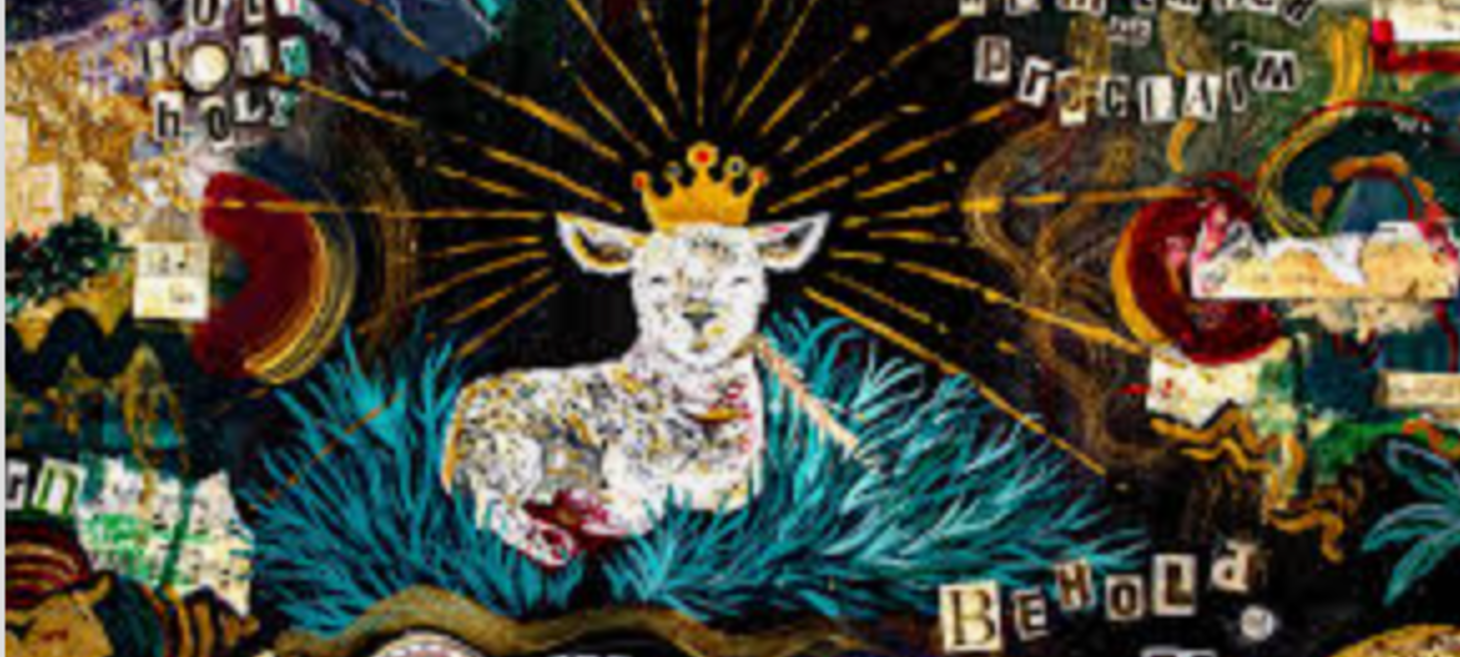
Behold The Lamb of God, who takes away the sin of the world
Holy Spirit take my words and speak to each of us according to our need.
In the Gospel of John, there is a moment that is quiet, almost ordinary on the surface. John the Baptist sees Jesus walking toward him and says, simply, “Behold, the Lamb of God, who takes away the sin of the world.” No thunder, no spectacle. Just a sentence. But in that sentence is the whole story of who Jesus is and what He came to do.
Today I want us to slow down and really listen to those words. Not just as a familiar phrase from church, but as a living truth for people trying to follow Christ in a complicated, exhausting, beautiful, broken world.
Let’s start with the image itself. Why didn’t John say, “Behold, the Teacher,” or “Behold, the Miracle Worker,” or even “Behold, the King”? Why a lamb?
Because to the people listening, a lamb was not a random animal. It was a symbol soaked in meaning. In the Hebrew Scriptures, lambs were offered in sacrifice. At Passover, the blood of a spotless lamb marked the doors of the Israelites so that death would pass over them. A lamb represented innocence, vulnerability, and the cost of redemption.
John was saying, in one sentence: This is the One who will deal with sin at its root. This is the One whose life will be given so that others may live.
But the symbolism runs even deeper. Think back to the very beginning of Jesus’ life. When He was born, Mary wrapped Him in swaddling cloths and laid Him in a manger. We often picture this as simply a tender detail of a poor family making do. But there is more here.
In that time, newborn lambs were often wrapped in strips of cloth to keep them from injuring themselves and to ensure they remained unblemished. A sacrificial lamb had to be spotless—without defect. So from His very first moments, Jesus is wrapped, protected, and presented in a way that echoes the care given to lambs prepared for offering.
Even before He speaks a word, His life is already pointing toward His purpose: not to dominate the world through power, but to redeem it through self-giving love.
In the Old Testament, sacrifices had to be without blemish. God did not accept what was broken, sick, or unwanted. The offering had to be whole. This wasn’t because God needed perfection in order to love people, but because the sacrifice was meant to symbolise the seriousness of sin and the holiness of God.
Jesus alone lives a life without moral blemish. He does not exploit, manipulate, or turn away from suffering. He does not compromise truth for comfort. He does not respond to hatred with hatred. In a world where we often excuse ourselves by saying, “Everyone does it,” Jesus shows us a different way: a life of integrity, compassion, and obedience to the Father.
When John calls Him the Lamb of God, he is saying, “This is the One who is truly pure—not just outwardly, but in heart, in motive, in love.”
There is another powerful image that helps us understand this. Shepherds in the ancient world would anoint their sheep with oil. The oil was not decorative. It was practical. It protected the sheep from insects that would burrow into their ears or wounds and cause infection. The oil soothed, healed, and guarded.
Jesus is both Lamb and Shepherd. As the Lamb, He gives Himself and was anointed with the very expensive Nard. As the Shepherd, He anoints, protects, and cares for His flock. And here is the beautiful paradox: the One who is sacrificed is also the One who watches over us.
In our lives, we are constantly exposed to things that harm us—fear, resentment, shame, anxiety, addiction, injustice, despair. We are wounded by others, and sometimes we wound ourselves. When we follow Jesus, we are not promised a life without pain, but we are promised a Shepherd who anoints us with grace, who protects our souls, who tends to our deepest hurts.
Notice what John does not say. He does not say, “the Lamb of God who points out the sins of the world,” or “who condemns the sins of the world,” or even “who manages the sins of the world.” He says, “who takes away the sin of the world.”
This is not about God standing at a distance, keeping score. This is about God stepping into human history and dealing with sin in the most personal way possible—by carrying it.
On the cross, Jesus does not merely suffer physically. He enters into the weight of human brokenness: betrayal, injustice, violence, abandonment. He takes upon Himself everything that separates us from God and from one another. And He does it not with bitterness, but with forgiveness.
This is not a God who demands payment and remains untouched. This is a God who absorbs the cost Himself.
Sometimes we think atonement is only about the moment of the cross. But the Lamb of God is at work long before that.
Jesus eats with people others reject. He touches those considered unclean. He listens to the ignored. He challenges systems that profit from exploitation. He teaches us to love our enemies, to forgive without limit, to seek the lost rather than protect our own comfort.
His entire life is an offering—a steady pouring out of love in a world built on power, image, and control. The cross is not an accident at the end of His story. It is the culmination of a life lived for others.
So how does this ancient image of a lamb speak into our lives now? We live in a world that often feels loud, divided, and relentless. We are told to brand ourselves, defend our opinions, protect our image, and win at all costs. Weakness is mocked. Gentleness is seen as naïve. Sacrifice is considered foolish unless it benefits us directly.
And then we are shown the Lamb. Jesus reveals that the power that truly changes the world is not domination, but love. Not violence, but self-giving. Not fear, but trust in God.
To follow the Lamb is to choose a different path. It means we refuse to reduce people to labels. It means we resist the temptation to dehumanize those we disagree with. It means we do not return cruelty for cruelty. It means we keep showing up with compassion, even when it costs us something.
God is glorified not when we appear perfect, but when we reflect the character of Christ.
God is glorified when: A parent chooses patience instead of anger in a moment of exhaustion. A student chooses honesty instead of cutting corners, even when it seems everyone else is doing it. A coworker refuses to join in gossip and instead speaks with dignity about others. A community chooses to care for the vulnerable rather than ignore them. A believer admits their failures and trusts God’s mercy rather than hiding behind pride.
These are not dramatic acts. They will not trend on social media. But they are the quiet, powerful ways the Lamb of God continues to take away the sin of the world through transformed lives.
We glorify God when we forgive instead of retaliate. We glorify God when we serve without needing recognition. We glorify God when we stand for truth with humility and love.
We glorify God when we allow His grace to change how we treat others.
The beauty of John’s declaration is that it is for the world. Not just the religious. Not just the morally successful. Not just people who already feel worthy.
The Lamb of God comes for those who are weary. For those who carry regret. For those who feel unseen. For those who have been hurt by religion as well as those who have been formed by it. For those who believe easily and for those who struggle to believe at all.
You do not have to have everything together to come to Jesus. You come as you are—and He meets you with mercy.
John does not say, “Understand the Lamb.” He says, “Behold.” Look. Pay attention. Let your eyes rest on Him. In a world that constantly demands our attention, we are invited to look again at Jesus not as a symbol we’ve outgrown, but as the living centre of our faith.
When we behold the Lamb, we see: A God who chooses love over power. A Savior who enters suffering rather than avoiding it. A Shepherd who tends to our wounds. A Redeemer who does not condemn us, but restores us.
And when we follow the Lamb, our lives begin to tell a different story. A story of grace in a culture of judgment. A story of humility in a world obsessed with self. A story of hope in a time of fear.
So today, wherever you find yourself—strong or struggling, confident or questioning—hear the words again: “Behold, the Lamb of God, who takes away the sin of the world.” Not just their sin. Not just someone else’s sin. Ours.
May we follow Him. May we reflect His love. And may God be glorified, as the life of the Lamb is made visible in us.
Amen.