
Homilies
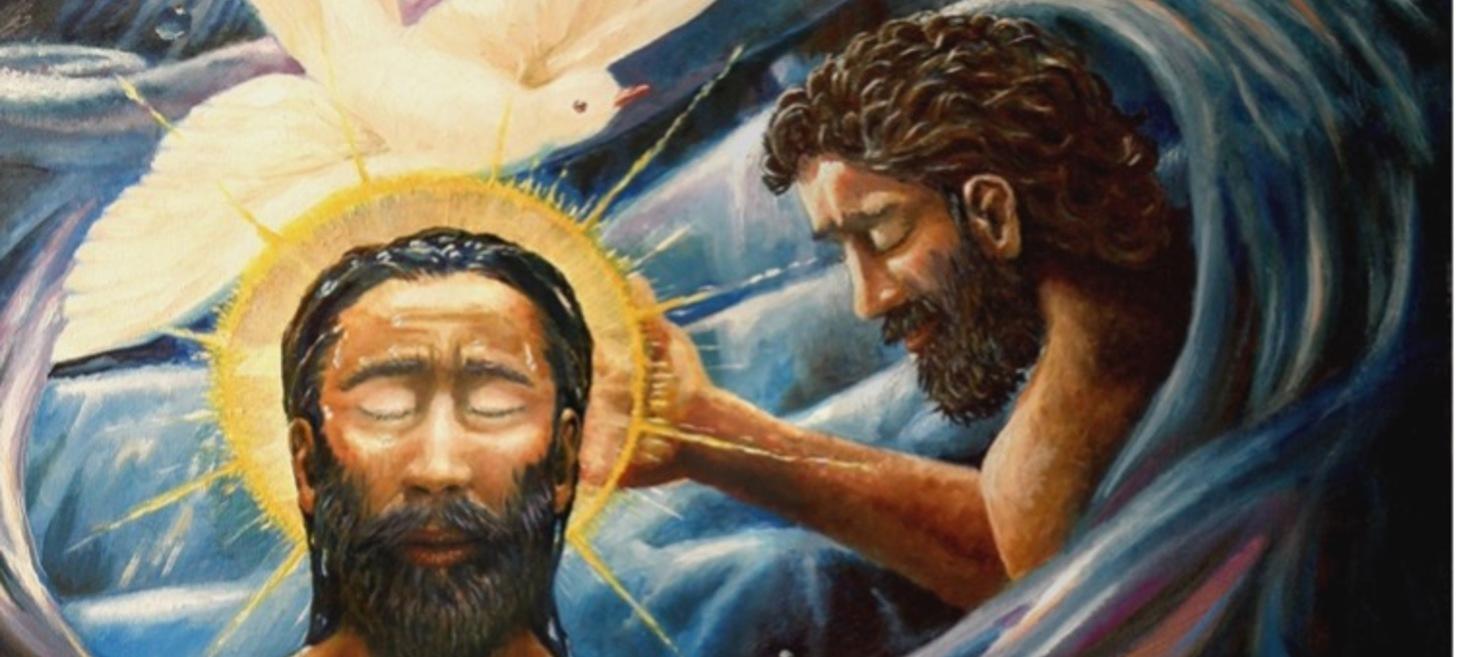
You are my beloved with whom I am well pleased
Today, in the Gospel, we were transported to the banks of the River Jordan, to hear the rush of water, the murmur of the crowds, and the urgent call of John the Baptist calling “Repent, for the kingdom of heaven has come near.” Then, into that moment stepped Jesus, choosing to stand in the same waters as those who were burdened, and those who needed mercy. He did not set himself apart but joined in.
Jesus, the sinless One, came to be baptised. Many people have questioned why he needed to be baptised. Ultimately, the short answer is that it was not because He needed cleansing, but rather, because we do. He identified completely with those who were there and with all humanity, entering our reality, our brokenness, and our need.
John hesitated and questioned: “I need to be baptised by you, and do you come to me?” But Jesus’ reply was to fulfil the prophecies. And so he entered the water, the Son of God, plunged into the depths.
As Jesus rose from the Jordan, heaven was torn open. The Spirit descended upon Him like a dove. And a voice thundered out a message which still echoes today: “This is my Son, the Beloved, in whom I am well pleased.”
This might seem a strange message for one who existed before time and was with God before the earth was formed, so this was not new information to Jesus — He has always been the Father’s Beloved — but it is now revealed for our sake. That we might know who He is. And ultimately, who we may become in Him. Because Christ transforms baptism. And through His baptism, ours receives its power.
When we are baptised, God declares something over us that no one and nothing can take away: ‘You are my beloved child. With you, I am well pleased.’
Perhaps we might not always feel lovable or pleasing to God. But our baptism is not based on our feelings. It is based on God’s promise. When God looks at those united in Christ, He sees His Son and He delights.
In baptism we are marked as Christ’s own forever. Nothing, not sin, not suffering, not even death can revoke that identity.
St Paul tells us that in baptism, we have died with Christ. And not only died but are also raised again with Him. The waters of baptism are simultaneously both a grave and a womb. We go down with the water, as our old self, and rise as a new creation.
Throughout the Bible, water has had symbolic meaning. It can be seen as cleansing, restoring, and powerful and stories involving water, often show a transitory phase.
Consider the most commonly known bible stories involving water:-
• The floodwaters that washed the world clean • The Red Sea that freed Israel from slavery • The waters over which the Spirit hovered at creation
All of these transitions have been fulfilled in the water of today’s gospel, as Jesus was baptised and where, through this, God brings forth a new humanity. We are not merely improved. We are reborn.
The word ‘Baptism’ itself has roots in the Greek words Bapto (to dip), Baptizo (to immerse), Baptisma (to wash by dipping) and Baptismos (a ritual washing). These words were once used in reference to dying cloth. Once something had been immersed or dipped, it came out again as something new. For example, a cloth would come out as a new colour. It would have a new and distinct appearance and would be identified by its new appearance; a ‘blue’ cloth. This is distinct from a cloth which is blue. The blue cloth, suggests a permanent change whereas a cloth which is blue might not always be so. This can be related to baptism in that the baptised , through the use of water are renewed with their identity in Christ.
Immediately after His baptism, the Spirit drives Jesus out into the wilderness and so into His ministry. For us, Baptism launches us into God’s mission as part of His creation. When we are baptised, it is not for comfort or pleasure, but for transformation and for witness. When we are baptised, we are commissioned to follow Jesus wherever He leads; to proclaim good news, bring healing, resist evil, and shine His light into darkness.
Too often, we think of our baptism as something behind us. A memory of something that happened long ago. But baptism is not a memory. It is a current identity, a current calling, a current strength.
Baptism doesn’t make us perfect, but when we doubt, baptism says: You belong to God. When we fall, baptism says: You are forgiven. And, when we fear, baptism says: You are safe and loved. When we feel alone, baptism says: The Spirit is with you. When we face death, baptism says: You will rise again. We can and should live in our baptism every day.
The ancient philosopher Heraclitus once said: “You cannot step into the same river twice.” The water flows. The world changes. And we too change. This beautifully echoes the Christian life. We were baptised once and yet its grace keeps flowing. The Spirit continues to form us into Christ’s likeness and we respond to that grace. The river changes, because God continues His work in us. We change, because Christ continues to raise us. Baptism is not only how our life in Christ begins, it shapes how we live every day..
So how does this actually shape our day-to-day lives? Baptism commissions us to embody Christ’s love in the world. Through baptism, God says to each of us: “You are my child.” “You are my beloved.” “I am well pleased with you.”
We hear this, not because we earned it. Not because we deserve it. But because Jesus has made us His own. We are heirs with Christ. We share His life. We walk in His Spirit. We live for His glory.
So let us remember our baptism today and every day and if you aren’t yet baptised but would like to be, speak to me after the service and we can arrange it.
For now, we should live as beloved children of God, walk in the newness of resurrection life and allow the river of grace to transform us, moment by moment.
The water is still flowing. The Spirit is still moving. The Father is still speaking:
“With you, My beloved, I am well pleased.”
Amen.