
Homilies
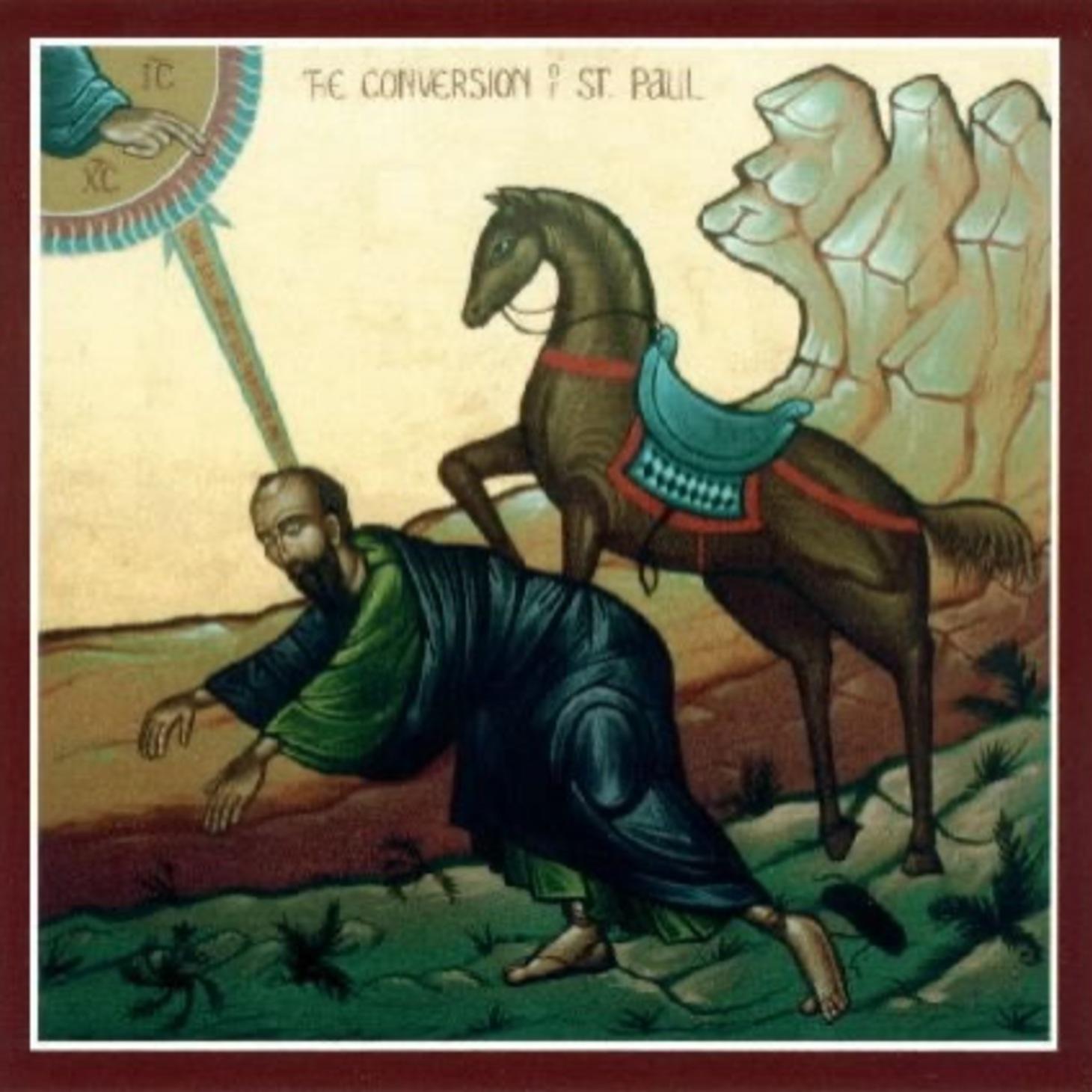
Saul, Saul, Why do you persecute me?
Holy Spirit take my words and speak to each of us according to our need.
“Saul, Saul, why do you persecute me?”
There are moments in Scripture that feel as though they interrupt the story mid-sentence. The conversion of Saul on the road to Damascus is one of them. The narrative is moving swiftly: authority has been granted, letters have been prepared, the purpose is clear. Saul knows exactly who he is and what he is doing. Until, suddenly, a light, a voice, and a question that changes everything:
“Saul, Saul, why do you persecute me?”
It is not an accusation shouted from heaven. It is a simple and curious question. And questions, have a way of opening cracks in certainties that we thought were unshakeably solid.
Saul is not asked, “Why do you think you are right?” or “Why are you doing this evil?” He is asked ‘why are you persecuting me?’ Jesus identifies himself so closely with the vulnerable community of believers that any violence against them is violence against himself. Christ does not stand apart from human suffering; He stands within it. When the Church is harmed, when people are excluded, silenced, or diminished in the name of righteousness, Christ feels it personally.
And that makes this story, that happened so long ago, still relevant to our own lives now. I would think it is safe to assume that most of us are not out hunting Christians. But persecution does not always look so dramatic. Sometimes it looks like indifference. Sometimes it looks like certainty that refuses to listen. Sometimes it appears in systems, habits, or attitudes which we participate in without ever questioning them.
The voice that stopped Saul on the road to Damascus, might also ask us: Where are you harming without noticing? Whose pain are you dismissing?
Saul’s greatest shock is not that Jesus is alive, but that Jesus knows his name. “Saul, Saul.” It is intimate. Close and Personal. God does not cancel Saul before transforming him. God calls him by name.
This is important for us to hear in a world where people are so quickly labelled, reduced, or written off. God’s work of transformation begins not with erasure, but with recognition. An acceptance that God loves us, but knows we are not perfect. God knows who we are, including the parts of us that still need to be healed, redirected, or undone.
Saul is blinded by the encounter. The one who thought he could see clearly now cannot see at all despite his eyes being open. He must be led into Damascus. This is not punishment; it is re-orientation. Sometimes grace disorients us before it enlightens us.
In a culture that prizes independence and self-assurance, this story reminds us that vulnerability, and faith instead of certainty, can be a holy place. There are seasons when faith does not look like confidence, but more like trust and being willing to be led.
For our perspective today, we know what happens next. It all works out and Saul becomes Paul, one of Jesus’ greatest advocates. But there is a somewhat worrying phrase before the end of the that is often glossed over: “I will show him how much he must suffer for the sake of my name.”
Suffering does not sound like good news, especially in declaring the Gospel. But this is not a declaration saying that God delights in pain or inflicts suffering as a test. Rather, it is an honest naming of what faithful love will cost in a broken world. Saul has previously used his power to harm. Now, having been converted and transformed, he will use his life, not just his words, to heal and that will not be an easy path.
Christian discipleship is not a promise of comfort, but a promise of meaning. To follow Christ is to align ourselves with truth, justice, and love, and those commitments can place us at odds with the values of our age. Paul’s suffering will come not because God is cruel, but because the world resists the kind of love that Christ embodies.
This matters deeply today. We might have asked ourselves the question: Is my faith meant to fit neatly into my lifestyle, or to shape it? Paul’s calling suggests the latter. Faith is not an accessory we add to an already-complete life. It is a re-ordering of our priorities, relationships, and hopes. It is an intrinsic part of our being which cannot be separated from the person we are.
Notice also that Saul does not receive his calling alone, in isolation. God speaks to Ananias, a hesitant, faithful disciple, who must overcome his own fear and prejudices to welcome Saul anew as Paul. God’s work of transformation is communal showing that even the most dramatic personal encounter with God requires the courage, acceptance and obedience of others.
Ananias lays hands on Saul, calls him “brother,” and restores his sight. This moment is a matter of huge importance for how the Church works. Before Saul preaches, before he suffers, before he becomes Paul the apostle, he is received by the Church. Belonging comes first. It precedes mission.
This is a what we need to hear and act on in our own communities. If the Church is to be a place of transformation, it must first be a place of welcome and acceptance, where people truly belong. People do not need to have everything figured out before they belong. God’s grace does not wait for perfection and neither should we.
If someone arrives in front of us, seeking Jesus, then God has nudged them and they have acted. It is not our job to judge them worthy or not, our job is to welcome them as they are and have faith that God will do what is necessary for them.
It is often easy spoken about Saul becoming Paul, but it is worth reflecting on that for a moment of clarity. Unlike some figures in Scripture, Abram becoming Abraham, Sarai becoming Sarah or Jacob becoming Israel, Saul’s name change is not presented in the same way, as a single, dramatic act of divine renaming. Rather, Saul is his Hebrew name, and Paul his Roman name. As his ministry expands into the Gentile world, he becomes increasingly known as “Paul.”
Yet, the shift in name still carries significance. Names shape identity. How long to parents deliberate over name choices for their children, to get it just right and set them up well for their lives ahead? To be known differently is to live differently. Saul, rooted in one cultural and religious world, becomes Paul, a bridge between worlds. The change reflects not a rejection of his past, but a transformation into a new life.
When I was ordained, I took a new name as a middle name. I chose Miriam. I thought about its meaning a lot before I settled on it. Miriam is a name of dual meaning. It means beloved and strong but it also means ‘a little bit rebellious’ – I’ve no idea why I thought it fitted me so well!
God does this often. God takes who we already are, our histories, skills, passions, even our mistakes or failings and redirects them for love. People used by God are often “renamed,” not necessarily with a new word, but with a new purpose. Saul, a persecutor becomes Paul, a pastor. A zealot becomes a servant. A life once defined by control becomes a life defined by grace.
So what name might God be calling you into? Not a literal one, perhaps, but a deeper identity. Are we known primarily by our jobs, our opinions, our wounds, our fears? Or are we learning to be known as people shaped by Christ’s love and compassion?
Building this teaching into everyday life does not require a road to Damascus. It begins in smaller, quieter ways. It looks like paying attention to the questions that unsettle us. It looks like continuing to listen when someone is challenging our assumptions. It looks like choosing curiosity over defensiveness, and humility over certainty.
It also looks like recognising Christ in the people around us. If persecuting others is persecuting Christ, then loving others is loving Christ. Every act of kindness, every refusal to dehumanise, every moment of patient listening becomes a form of worship.
And yes, there may be suffering, perhaps not necessarily the dramatic kind that Paul had, but real none the less. The discomfort of change. The cost of integrity. The vulnerability of compassion. But we do not suffer alone. Paul’s life was marked not only by hardship, but by joy, community, and an unshakeable sense of purpose.
In the end, the story of Saul/Paul is not just about one extraordinary conversion. It is about a God who interrupts us with grace, calls us by name, and invites us into lives that matter.
May we have ears to hear the question when it is asked of us. May we have courage to be led when our vision fails. And may we trust that the God who calls us is also the God who walks with us, whatever the cost, and whatever our name becomes.
Amen.