
Homilies
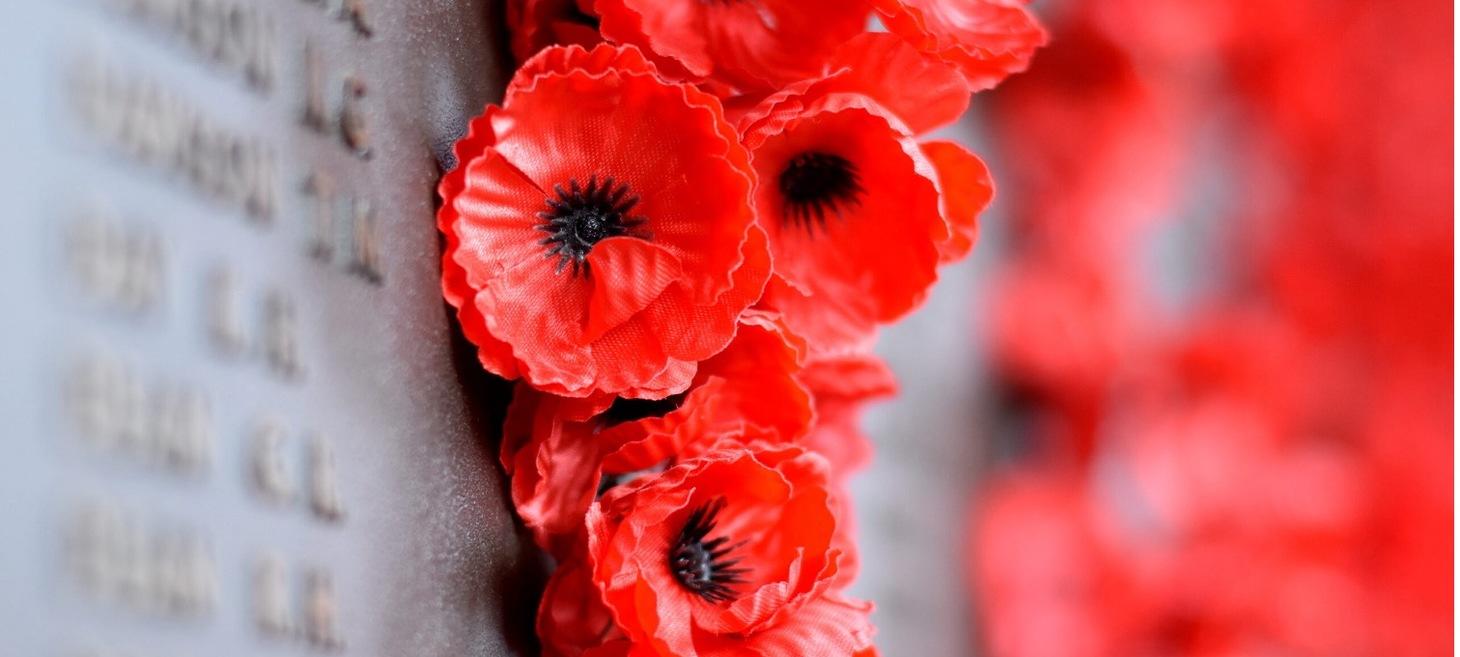
We Remember - A Resurrection Promise
Holy Spirit take my words and speak to each of us according to our needs.
Every year, as the second Sunday of November draws near, our hearts and minds turn to remembering those who have fought in wars and battles all over the world and in particular, both the World Wars. Those with living memories have passed on the significance of the fields of Flanders, the beaches of Normandy, the skies over Britain, the deserts, and oceans where so many gave their lives. Today, we pause in silence. We lay our wreaths. And we remember.
And in our remembering, we are often drawn to words that have echoed for generations, expressing both the hopes and the devastation of war: One particularly popular piece of poetry often used at this time is..
In Flanders Fields By Lt. Col. John McCrae (1915)
In Flanders fields the poppies blow
Between the crosses, row on row,
That mark our place; and in the sky
The larks, still bravely singing, fly
Scarce heard amid the guns below.
We are the Dead. Short days ago
We lived, felt dawn, saw sunset glow,
Loved and were loved, and now we lie
In Flanders fields.
Take up our quarrel with the foe:
To you from failing hands we throw
The torch; be yours to hold it high.
If ye break faith with us who die
We shall not sleep, though poppies grow
In Flanders fields.
In our readings today, we heard Job’s voice rise from suffering: “O that my words were written! … For I know that my Redeemer lives.” Like the voices from the Fields of Flanders, it is the cry of those who know pain and loss and yet dare to believe that death is not the end.
Job’s declaration, “in my flesh I shall see God”, stands as one of Scripture’s greatest statements of hope. It is a hope that the dead themselves could not fully see, and yet longed for: the assurance that beyond the grave there is life, that the Redeemer will make all things new.
Likewise, in Psalm 17, the psalmist prays, “Keep me as the apple of your eye; hide me under the shadow of your wings.” These words could be prayed by every soldier in a trench, every family waiting at home, every soul that yearns for peace. And the psalm closes with quiet faith: “When I awake, I shall be satisfied, beholding your likeness.” This realises the hope that even in the darkest night of war or grief, the faithful look forward to the dawn; the awakening to God’s presence.
Paul, in his letter to the Thessalonians, was writing to a community that were confused and frightened. He urged them, “Do not be quickly shaken in mind or alarmed… Stand firm and hold fast to the traditions that you were taught.” For us this consolidates that remembrance, is not only about recalling the past, but about holding fast to faith, to truth, and to compassion in a world that still trembles with fear and conflict.
The torch passed “from failing hands” in McCrae’s poem is a powerful image. But for Christians, the torch we carry is not or at least shouldn’t be, the flame of vengeance or nationalism. It is the light of Christ, shining through the darkness. We honour the fallen not by repeating their battles, but by standing firm in peace, justice, and faith.
In today’s Gospel reading, we heard how when Jesus met the Sadducees, who denied the resurrection he replied: “God is not God of the dead, but of the living; for to him all of them are alive.” This is the heart of Christian remembrance. We remember the dead not as lost or gone, but as alive to God, and held in His eternal love. The rows of white crosses in Flanders fields are not merely symbols and markers of death, but signposts of resurrection hope.
The larks that “still bravely singing, fly / Scarce heard amid the guns below” remind us that even when the world seems overcome by death, life continues to sing and God’s creation refuses to be silenced. Creation, being the unveiling of the nature of God, reassures us that God’s love cannot be ended. It endures steadfastly.
Remembrance Sunday is not simply about looking back; it is about living differently because we have remembered. We honour those who died by choosing the ways of peace. We remember the price of freedom by working for a world where no one need die in war again.
The poem’s final lines — “If ye break faith with us who die, we shall not sleep…” can easily be reimagined in the light of the Gospel: If we lose faith in Christ’s victory over death, if we cease to love, then we truly break faith with those who died in hope. But when we live in faith and love, they do not sleep; they live on still, within God’s love.
Today, as the poppies bloom and silence falls, we hold together grief and gratitude, memory and hope.
Job’s faith becomes ours: “I know that my Redeemer lives.”
The psalmist’s prayer becomes ours: “When I awake, I shall behold your face.”
And Christ’s promise becomes our anchor: “He is not the God of the dead, but of the living.”
So let us remember, not in despair, but in gratitude and with resolve to keep the faith of resurrection hope, carrying forward the torch of peace, the light of faith, and the love that conquers death itself.
Let us pray:
Almighty and eternal God,
from whose love in Christ we cannot be parted,
either by death or by life:
hear our prayers and thanksgivings
for all whom we remember this day.
In your mercy, grant them rest and peace,
and give us grace to follow in their steps,
until we come to your eternal kingdom,
where sorrow and pain are no more,
but life everlasting reigns;
through Jesus Christ our Lord.
Amen.