
Homilies
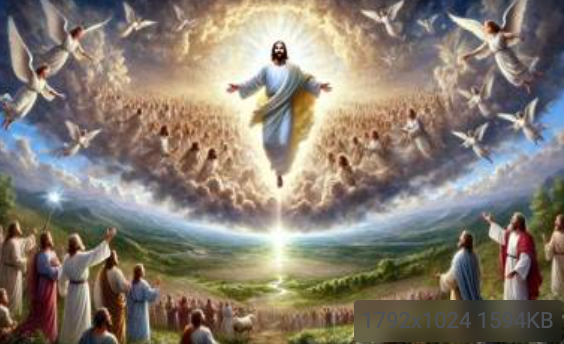
Hi Kingdom will have no End
Holy Spirit take my words and speak to each of us according to our need.
I wonder how many of us find ourselves feeling a little uncertain about the world we are living in at the moment. We hear about wars and conflicts, political instability, economic pressures, climate change and an uncertain future. We see growing divisions in society, rapid technological change and familiar ways of life being challenged. Sometimes it feels as though the world is changing faster than we can make sense of it. And the Church is not immune. Congregations are changing, buildings are closing, resources are stretched, and the patterns of ministry that served previous generations are not necessarily working in the same way today.
That can leave us feeling anxious. We might worry about what the Church will look like in the future, whether there will be enough people or resources, and what place faith will have in an increasingly different society. We might even find ourselves longing for a time when things seemed a little more certain. And that is why today's Gospel reading feels particularly relevant, especially as were enter into Advent today.
Jesus speaks of a world in which the sun is darkened, the moon no longer gives its light, the stars fall from heaven and the powers of the heavens are shaken. It is a dramatic picture of the collapse of the established order. Everything that people have relied upon, everything that has seemed permanent and dependable, suddenly becomes uncertain. But Jesus doesn't tell his followers to despair. Instead, he says: 'Then they will see "the Son of Man coming in clouds" with great power and glory.' Jesus is reminding his followers that the end of the established order is not the end of God.
The things we build may not last. The institutions we create may change or disappear. The structures we depend upon may be shaken. But God's purposes remain. And that is something we, as the Church, need to hear.
Sometimes we become so concerned about keeping the Church going that we forget that the Church belongs to God in the first place. We can become anxious about buildings, numbers, finances, structures and traditions, spending so much time worrying about what we might lose that we forget to stop and reflect on what God might be doing now.
Of course, all of those things do matter. Our buildings carry generations of prayer and worship. Our traditions connect us with those who have gone before us. Our institutions enable us to work together and serve our communities. But they are not the kingdom of God. The kingdom is bigger than our buildings, bigger than our denominations and bigger than anything we can organise, manage or control. It is not our own empire that is import, but God’s kingdom. It all belongs to God.
And that brings us to Advent. Because as we begin this season, we prepare to celebrate the coming of the King of Glory. Yet what a surprising sort of king he turns out to be!
In today's Gospel, Jesus speaks of the Son of Man coming in clouds, with great power and glory. Yet when we come to Christmas, we remember that this same King enters our world not surrounded by armies, welcomed into a palace or accompanied by political leaders. He comes as a helpless baby, born to an ordinary young woman, laid in a manger, in circumstances of poverty and uncertainty.
The one who holds the universe in his hands places himself in the hands of his mother. The one whose kingdom will have no end enters a world governed by emperors and earthly rulers. The King of Glory comes in vulnerability and humility.
The world often understands power in terms of control, dominance, wealth and influence. But God shows us something different. God's kingdom is established not through conquest, but through love; not through domination, but through service; not through fear, but through hope.
The baby in the manger will grow up to welcome the outsider, touch the untouchable, forgive the unforgivable, feed the hungry, heal the broken and ultimately give his life for the sake of the world.
This is the new order that Advent invites us to look towards: a kingdom where the last are first, the humble are lifted up, the poor are blessed, the merciful find mercy, and love becomes the measure of greatness.
And that speaks to how we might respond to the changes taking place around us. When the world feels uncertain, our natural instinct is often to hold on more tightly to what we know. We want to preserve what is familiar and protect what we have. There is nothing wrong with that. Change can be difficult, and sometimes it brings genuine loss and grief. But there is a difference between being faithful to what God has given us and being frightened of what God might be asking us to let go of. Perhaps sometimes, we mistake familiarity for faithfulness.
Are we so busy trying to preserve the Church as we know it that we risk missing the new things God might be doing? What if the future of the Church isn't simply about recreating the past, but discovering new ways of being Church, serving our communities and sharing the love of Christ? Perhaps the question isn't simply, 'How do we keep our churches going?' but, 'How do we become people through whom others can glimpse the kingdom of God?'
We are not called to build the kingdom as though it belongs to us. We are invited to recognise, receive and participate in something God is already doing. And that is both a challenge and a source of enormous freedom. We don't have to have all the answers. We don't have to know exactly what the future will look like. We are not responsible for saving the Church. We are not the Saviour. We follow the Saviour.
Faith doesn't mean that we never feel afraid, or that we pretend everything is fine when it isn't. It means that our fear doesn't have to determine how we live. Faith doesn't remove uncertainty, but it gives us somewhere to stand in the midst of it. It allows us to face change with courage, not because we know how everything will turn out, but because we know whose hands the future is in and that it will be ok, whatever it looks like.
There is one final image in today's Gospel that I think is particularly important. After all the darkness and upheaval, Jesus says that the Son of Man will send out his angels and gather his people from the four winds, from the ends of the earth to the ends of heaven.
The final image isn't one of destruction. It is one of gathering. God gathers his people. Nobody is forgotten, nobody is beyond his reach, nobody is lost.
And that is what the Church is called to reflect: a community of welcome, compassion and belonging. A place where the lonely find companionship, the frightened find reassurance, the grieving find comfort, and those who feel they don't quite fit anywhere else discover that there is room for them.
People of peace in a world of conflict. People of generosity in a world of inequality. People of welcome in a world that divides. And people of hope in a world that is often frightened of the future.
So, as we begin Advent, we are invited to look at the world around us a little differently. Yes, there is uncertainty. Yes, there are things changing that we would rather stayed the same. But perhaps we don't need to be quite so frightened of the things that are changing.
Advent isn't simply about looking backwards to remember a baby born in Bethlehem, nor is it simply about looking forwards to some distant future when Christ will come again. It is about recognising that the kingdom Jesus came to establish is already breaking into our world. The King we are waiting for is the King who is already among us. His kingdom is not something we can control, manufacture or preserve through our own efforts. It is God's kingdom, and we are invited to be part of it.
This Advent, rather than spending all our energy worrying about what might be coming to an end, we might spend a little more time looking for what God might be bringing to birth. Rather than clinging so tightly to what we know, we might find the courage to follow Christ into what we don't know…yet. And rather than allowing fear to shape our response to a changing world, we might allow faith, hope and love to shape the way we live.
Because the end of the established order is not the end of God. The darkness does not overcome the light. And the future does not belong to those who have the greatest power, the most influence or the strongest institutions. It belongs to God. The kingdoms of this world will rise and fall. Our institutions will change. The things we build will not last for ever. But the kingdom of God is everlasting.
So let us watch, let us wait, and let us prepare to welcome our King: the King who came among us in humility, who is with us now, and who will come again in power and glory to gather all things into his everlasting kingdom. For the King of Glory is coming. And his kingdom will have no end. Amen.