
Homilies
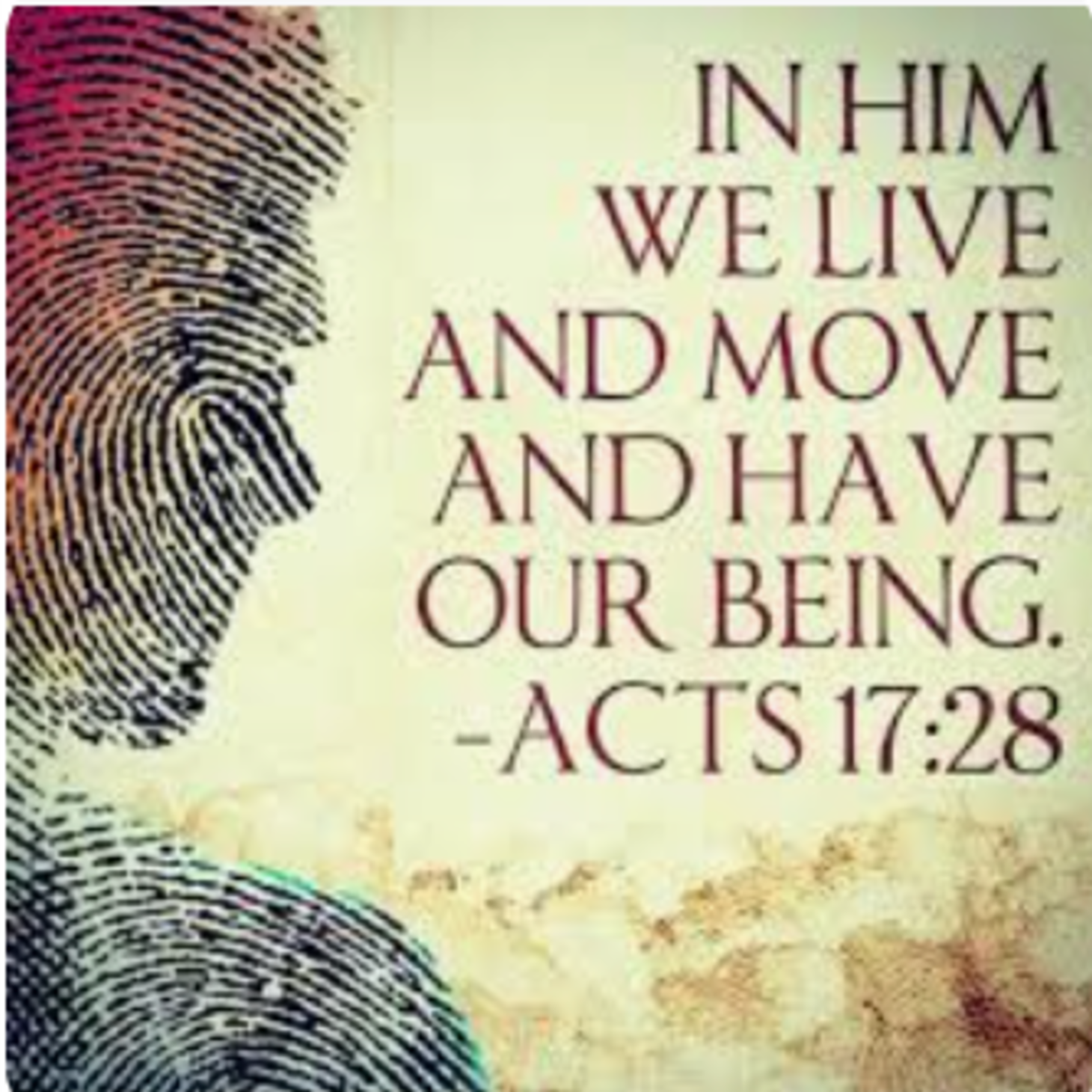
For in Him, we live, move and have our being
Holy Spirit take my words and speak to each of us according to our needs
“For in him we live and move and have our being”; and then he adds, “For we too are his offspring.”
This verse, spoken by Paul to the people in Athens is one of those verses that seems to be able to open the window of the soul. It reminds us that God is not distant, not hidden away in some far-off heaven, but nearer to us than our own breathing. In God, we live. In God, we move. In God, we have our being.
Every breath we take is held in God. Every step we walk is made possible by God. Every field, every garden, every stream, every loaf of bread, every table shared; everything rests in God’s loving care.
And that is why, this Sunday, known as Rogation Sunday, matters. Rogation is a word we don’t really hear anymore, but it comes from the Latin word rogare, which means to ask. Rogation days invite us to pause and to notice. Traditionally, these were the days when people would walk the boundaries of the parish, praying for the land, blessing the crops, asking God’s protection over the community, and giving thanks for the gift of creation.
Over time, it became difficult to distinguish between thanksgiving in rogation and thanksgiving for harvest, but actually, rogation was never simply about agriculture. It was about relationship.
It was about remembering that we belong to this place, and that this place belongs, ultimately, to God. And sometimes we forget that.
We live in a world that often treats the earth as something to be used rather than cherished. We can fall into thinking that food simply appears on supermarket shelves, that water simply comes from the tap, that warmth simply arrives when we turn on the heating.
But Rogation reminds us to look deeper. Behind every loaf of bread there is a farmer who sowed seed. Behind every pint of milk there is someone rising before dawn. Behind every parcel delivered to our doors there is a driver, a warehouse worker, a packer, a planner. Behind every tin, every packet, every bottle, there are factories, producers, engineers, cleaners, and countless unseen hands.
There are people who grow, people who gather, people who process, people who package, people who transport. And behind all of them is the goodness of God, the One in whom we live and move and have our being.
So today, on Rogation Sunday, we come before God to do two things: To ask – for God’s blessing on our land, our work, our food, and our community. And to give thanks – because everything we have is a gift from God.
But thanksgiving, is not just a polite religious extra. It is a spiritual necessity. Gratitude teaches us humility. It reminds us that we are not self-made people. We are dependent people. We rely on God, and we rely on one another.
And it follows that if we are truly grateful, then gratitude must shape how we live. Because it’s about being responsible too.
God has given us this beautiful world – but we are stewards, caretakers of it. That means we need to care for the land, not waste what we have, and make sure everyone in our community has what they need – especially the poor, the hungry, those who feel forgotten, and those who have no voice.
We often speak about our rights—and rightly so. We speak about the right to safety, the right to dignity, the right to clean spaces, the right to peace in our communities, the right to enjoy the beauty of where we live.
But scripture gently asks us: what about our responsibility?
If we want the blessing of belonging somewhere, we must also accept the calling of caring for it. If we claim the right to enjoy creation, we must also take responsibility to protect it. If we value our neighbourhood, we must help keep it clean. If we value our countryside, we must respect it. If we value those who produce our food, we must treat them with fairness and dignity. If we value our community, we must contribute to its wellbeing.
We cannot demand ownership without stewardship. and We cannot ask for blessing while neglecting the gift.
In Genesis, humanity is not given dominion for selfish gain, but stewardship for loving care. We are placed in the garden “to till it and keep it.”
To keep it, guard it, tend it, and to leave it better, not broken.
That applies to the land, yes—but also to our relationships, communities, workplaces, and the shared life of society. It applies to how we treat the people whose labour sustains our lives. It applies to how we speak about the world and how we pass it on to those who come after us.
Because if, as Paul says, we are God’s offspring, then creation is not a possession, it is family inheritance. And inheritance is never just for consumption; it is for care.
Jesus tells us: “I am the vine, you are the branches. If you remain in me and I in you, you will bear much fruit.”
He uses this image of a growing plant to remind us that when we stay close to Him, when we listen to His voice and live in His love, our lives will be fruitful. That doesn’t just mean doing good things, but living in a way that brings life, hope, and goodness into the world that we inherited from God.
Rogation is, at heart, a time of holy attentiveness.
It asks us: Have we noticed the gifts around us? Have we thanked those who serve quietly? Have we cared for what has been entrusted to us? Have we remembered whose world this is?
Because this world is not ours to exploit. It is God’s world. And we are God’s people. “In him we live and move and have our being.”
So, the street outside this church matters. The local farms matter. The corner shops matter. The delivery drivers matter. The factory workers matter. The cleaners matter. Our neighbours matter. All of it matters because all of it is held by and in God.
The invitation of rogation calls us to walk more gently, give thanks more readily, care more deeply and to recognise the holiness in ordinary things, remembering that true belonging is never just about rights, it is always also about responsibility.
For we, too, are God’s beloved creation and heirs of His inheritance through Jesus.
So, let us ask boldly – for rain, for growth, for justice, for provision. Give thanks abundantly – for every blessing, every meal, every moment of beauty in creation. And live faithfully – as good stewards, kind neighbours, and grateful children of God.
Because, as God’s children, we should learn to love what God loves, protect what God entrusts, and give thanks for the grace through which we live, and move, and have our being. Amen.